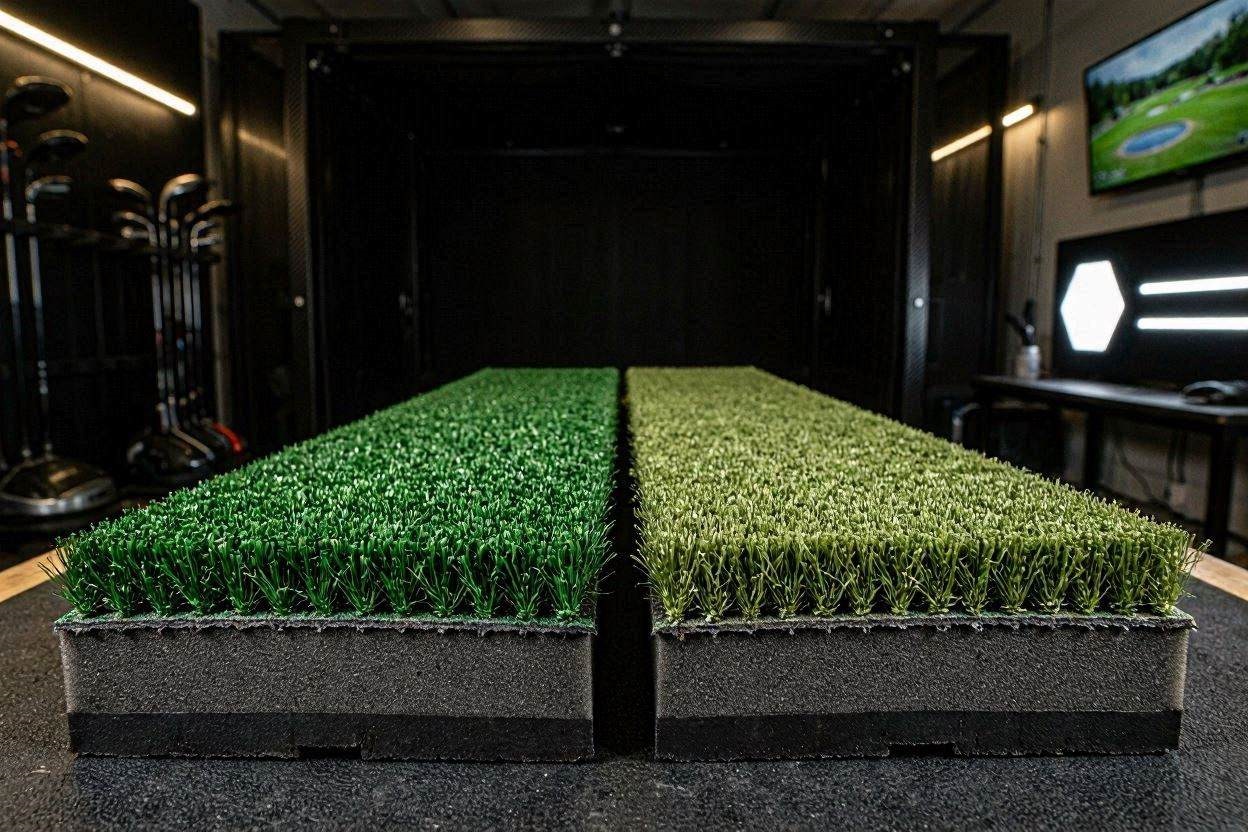
Building an indoor golf simulator studio requires evaluating several critical material layers, and no single component directly impacts your physical health more than the hitting strip. Many indoor golfers invest thousands of dollars into ultra-precise overhead launch monitors, high-performance PCs, and commercial-grade impact screens, only to skimp on the literal piece of turf beneath their feet. This choice leads directly to joint fatigue, wrist injuries, and inaccurate launch monitor data due to artificial clubhead deflection.
If you are currently trying to decide between the Sigpro Preferred vs Sigpro Softy for your simulator bay or custom DIY floor build, you are looking at two highly specialized hitting inserts from The Indoor Golf Shop. While they share an identical physical footprint designed to drop seamlessly into modular flooring systems, their internal mechanical architectures are completely distinct. This technical, specification-driven guide will benchmark the turf density, pile height, compression metrics, and shock dissipation capabilities of both inserts to help you make an informed decision.
The “Quick Answer” / Key Takeaways
- The Compression Factor: The Sigpro Softy utilizes a series of vertical compression slots and foam layers underneath the turf canopy to absorb steep downward wedge strikes, making it the superior option for golfers prone to elbow or wrist fatigue.
- Real Tee Integration: The Sigpro Preferred features an incredibly dense, tightly woven nylon mesh that allows you to push a standard wooden tee directly into the fibers anywhere on the strip, whereas the Softy relies on pre-cut tee holes or specific low-profile plastic tee inserts.
- The Price vs. Value Delta: Spending the extra capital for the Sigpro Softy is highly recommended if you engage in daily, high-volume iron practice where maximum energy dissipation is mandatory to prevent repetitive strain injuries.
- Launch Monitor Accuracy: Both strips feature a stable surface plane that eliminates the artificial clubhead “skip” found on cheap driving range mats, ensuring your launch monitor registers authentic vertical launch angles and spin axis metrics.
1. Material Architecture and Subsurface Composition
To truly differentiate the Sigpro Preferred vs Sigpro Softy, we must look below the green synthetic fibers. The surface layer is only responsible for authentic ball presentation and aesthetic texture; the core work of energy management occurs in the subsurface backing layers.
Sigpro Preferred Construction
The Sigpro Preferred hitting strip is engineered around a highly durable, traditional heavy-duty rubberized foam foundation. This backing provides a solid, uniform baseline that mimics tightly packed tournament fairways. The polyurethane foam base is firm to the touch, offering significant structural resistance when a clubhead drives through the ball.
This architectural stiffness means that energy is transferred uniformly across the base layer. For golfers with a shallow, sweeping path who clip the ball cleanly off the top of the turf canopy, the Preferred provides an exceptionally stable and predictable platform. The material is designed not to bunch, warp, or crease under foot traction or during high-torque driver swings.
Sigpro Softy Construction
The Sigpro Softy earns its title by deploying a radically different subsurface concept. Beneath the synthetic grass carpet sits a complex, multi-layered compression matrix consisting of an advanced, lower-durometer polyurethane blend.
Instead of a single solid piece of dense rubberized foam, the Softy features engineered vertical compression cavities or slots. When a clubhead executes a steep, descending blow with a short iron or wedge, the air and material inside these specialized cavities compress instantly. The base acts like a series of miniature shock absorbers, collapsing downward to minimize the instant peak force of the strike. This structural movement successfully simulates the physical displacement of natural topsoil, allowing the club leading edge to plunge past the ball’s resting plane without generating an explosive shockwave up the shaft.
[IMAGE PLACEHOLDER: A technical engineering diagram showing a cross-section view of the underlying foam absorption layers of the Sigpro Preferred versus the compression slots of the Sigpro Softy + Alt Text: Subsurface compression layers compared for the Sigpro Preferred vs Sigpro Softy hitting strips]
2. Turf Density, Pile Height, and Real Tee Capabilities
The visual and tactile properties of the synthetic fibers dictate how easily a player can set up a shot and how realistically the clubface interacts with the ball. Pile height and fiber choice are critical metrics to benchmark before cutting into your subfloor.
Fiber Density Comparison
The Sigpro Preferred utilizes an ultra-dense, tightly curled nylon fiber system. The face weight of the yarn is exceptionally high, which keeps the fibers standing upright and tightly interlocked. This massive density creates a surface that easily supports the weight of a standard golf ball without allowing it to sink into a deep, recessed lie.
Because the nylon mesh is so tightly bound, it possesses the unique physical ability to hold a standard wooden tee directly in the fibers. You do not need to hunt for specific rubber tubes or drill holes through your baseboard. You simply push a regular wooden tee into the turf anywhere on the Preferred strip, and the density of the fibers clamps the wood firmly in place, allowing you to freely adjust your tee height for drivers or three-woods.
The Sigpro Softy chooses a slightly longer, more plush fiber profile that favors a softer, more realistic lawn texture. The turf pile feels deeply cushioned under the sole of the club. However, because the fiber matrix is designed to yield and compress, it lacks the raw lateral clamping force required to support a standard wooden tee anywhere on the face. To accommodate driver play, the Softy layout incorporates pre-drilled ports designed for rubber tee inserts, or users must rely on friction-fit low-profile plastic tee discs that sit flat on top of the turf canopy.
3. Biomechanical Shock Dissipation and Injury Prevention
When practicing indoors inside a hitting cage or a full media room, you lack the recovery time offered on an outdoor course where walking between holes allows joints to cool down. An indoor golfer can easily rack up 150 consecutive iron swings in an hour. This volume magnifies the impact properties of your turf selection.
The Physics of Shockwaves
When a steel or graphite shaft traveling at 90 miles per hour violently hits an unyielding surface, a high-frequency shockwave travels vertically back through the grip tape and into the musculoskeletal structure of the golfer. This energy transfer attacks the flexor tendons of the wrist and the medial epicondyle of the elbow.
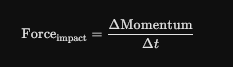
To reduce the peak impact force, you must increase the time interval (Delta) over which the clubhead slows down.
- The Preferred Metric: The Sigpro Preferred features a firm profile, meaning it slows the club down over a very short time window ($\Delta t$ is small), resulting in a higher peak force sent to your tendons. If you already suffer from joint discomfort or practice every single day, this firm profile can accelerate fatigue.
- The Softy Metric: The Sigpro Softy maximizes the deceleration time window ($\Delta t$ is large) through its collapsing vertical base slots. By extending the time it takes for the club to come to a complete stop by even a few milliseconds, the peak kinetic energy spike drops dramatically. This biomechanical reduction in force makes the Softy the clear choice for players seeking to protect old joint injuries or maintain pain-free practice sessions.
4. Mat Bounce and Launch Monitor Data Integrity
A major frustration for simulator owners is experiencing “mat bounce” anomalies that warp the data displayed by high-end photometric or radar-based launch monitors. Your hitting strip must provide realistic physical penalties for poor swings without distorting clean data.
[EXTERNAL LINK: Biomechanical engineering analysis tracking joint stress variations across different synthetic hitting surfaces]
Cheap, low-grade driving range turf acts like a trampoline. When a player hits a “fat” shot, striking the mat two inches behind the ball, the clubhead bounces cleanly off the rubber base, skips upward into the ball’s equator, and launches it into the air with artificial clean speed. The launch monitor calculates a perfect shot, masking a critical swing flaw.
Both the Sigpro Preferred vs Sigpro Softy are explicitly engineered to combat mat bounce, but they accomplish this through opposite mechanical traits.
The Sigpro Preferred avoids artificial skip because its dense fibers provide natural friction that slows down an early strike, resulting in a realistic drop in ball speed on the screen. The Sigpro Softy prevents bounce by allowing the club to sink down into the gel-like compression base. If you hit behind the ball on the Softy, the mat completely absorbs the club’s energy, burying the leading edge slightly and penalizing your launch angle and smash factor exactly like a real fat shot out on the course. Therefore, both strips protect the data integrity of your launch monitor, ensuring your virtual practice translates accurately to your real-world handicap.
[IMAGE PLACEHOLDER: A split-screen illustration showcasing how a golf club face interacts with the ball on a clean strike versus an early fat strike on a premium simulator mat insert + Alt Text: Clubhead turf interaction comparison for the Sigpro Preferred vs Sigpro Softy hitting mats]
5. Physical Dimensions, Weight, and Modular Floor Retrofitting
For simulator builders attempting to cut custom slots into an existing foam subfloor or drop an insert into a commercial panel system, understanding the exact dimensional tolerances of the Sigpro line is a mandatory step.
Both options are produced to match the standard sizing conventions utilized by premium indoor simulator manufacturers. The standard hitting strip panel measures exactly 28 inches in length by 12 inches in width. This standard layout allows you to easily hot-swap the panels inside a full-sized mat system if your practice habits evolve over time.
| Technical Specification | Sigpro Preferred Hitting Strip | Sigpro Softy Hitting Strip |
| Length x Width | 28 Inches x 12 Inches | 28 Inches x 12 Inches |
| Total Assembly Thickness | 1.50 Inches (1-1/2″) | 2.375 Inches (2-3/8″) |
| Base Base Composition | High-Durometer Solid Poly Foam | Multi-Layer Slotted Compression Matrix |
| Turf System Profile | Tight, Curled Dense Nylon Mesh | Deep, Cushioned Long Pile Fiber |
| Tee Strategy | Accepts Standard Wooden Tees Directly | Utilizes Integrated Rubber Tee Ports |
| Primary Feedback Style | Firm, Stable Tournament Fairway Feel | Deep, Forgiving True Turf Compression |
Crucially, note the thickness delta between the two units. The Sigpro Preferred features a streamlined 1.50-inch total height, allowing it to sit flush with standard interlocking EVA foam garage floor tiles. The Sigpro Softy is significantly thicker, measuring 2.375 inches from the base of the foam to the peak of the turf canopy. If you are retrofitting the Softy into an existing shallow floor system, you will need to add a shim or construct a recessed well into your subfloor plywood to ensure the hitting strip does not sit dangerously higher than your surrounding stance mat area.
6. Sourcing Your Premium Simulator Upgrades
Upgrading to a high-ticket, performance-validated hitting surface is one of the most critical structural decisions you can make to future-proof your indoor simulator studio. These advanced, biomechanically rated hitting panels are specialized components that are not available through generic retail chains or standard sporting goods outfits.
To guarantee you receive genuine, fully warrantied components, you should source your hitting strips directly through authorized distributors like The Indoor Golf Shop or Carl’s Place (accessible via reliable consumer affiliate tracking programs like ShareASale, Impact, or PartnerStack). Sourcing your equipment through these verified distribution channels protects your investment from counterfeit, low-density foam lookalikes that rapidly degrade after a few hundred impacts.
Furthermore, these premium retailers specialize in providing complete, system-wide integration support. If you choose the thicker profile of the Sigpro Softy, their platforms allow you to pair the strip with matching modular stance panels or customized subfloor layouts, ensuring that your launch monitors, hitting strips, and standing mats arrive perfectly balanced down to the exact millimeter.
[INTERNAL LINK: 7 Critical AccuGolf Hawkeye Launch Monitor Setup Steps for Zero Latency]
7. Preventive Maintenance and Rotation Hack
To ensure your chosen hitting panel delivers peak shock dissipation and clean launch metrics over years of continuous volume, implement this simple maintenance routine.
The Concentric Wear Pattern Fix
Golfers are creatures of habit. When practicing inside an indoor bay, you tend to place the golf ball on the exact same square inch of turf on every single shot, right in front of your launch monitor’s optical lenses. Over months of consistent volume, this concentrated impact zone will experience micro-compaction. The underlying foam cells or compression cavities directly beneath that specific spot will gradually fatigue, while the remaining 90% of the hitting strip stays pristine.
The Rotation Hack: Every 30 days, physically lift the hitting strip out of its floor cutout, rotate it 180 degrees horizontally, and drop it back into place. By constantly changing which side of the strip faces the target screen, you distribute the severe clubhead compression loads evenly across both halves of the internal foam matrix. This simple, two-minute adjustment prevents premature soft spots from developing and effectively doubles the functional lifespan of your investment.